




پست قبلی
The essence of the Art Deco style lies in its patterns–geometric symmetrical lines, fan‑shaped rays, stepped borders.
Once these delicate patterns become blurred or faded, the visual impact of the entire design language is greatly diminished.
In the high‑frequency use of commercial spaces, what determines how long these patterns can "live" is an often‑overlooked indicator: decorative pattern retention.
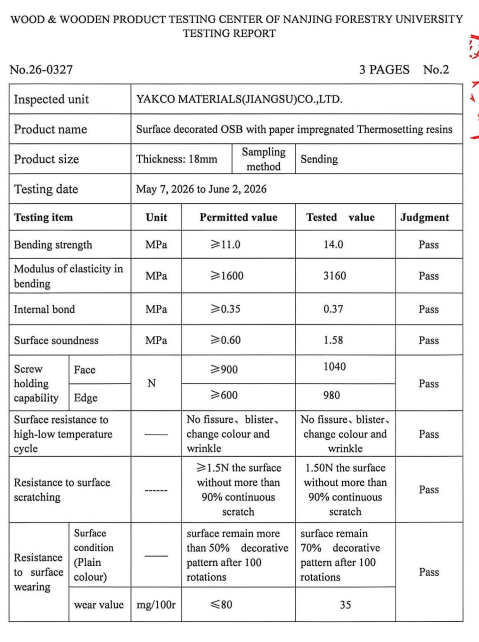
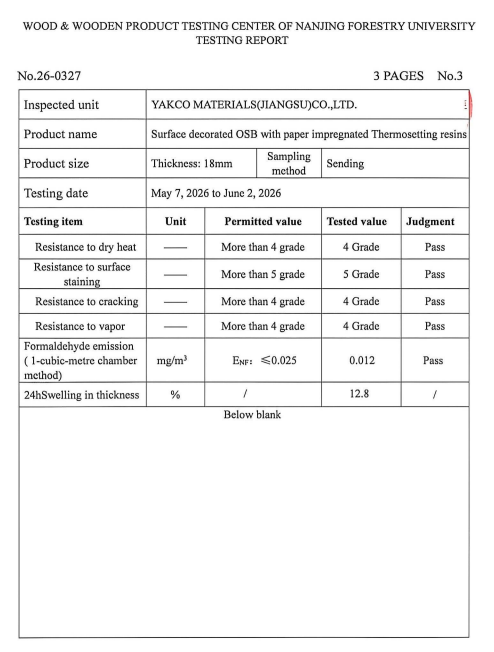
YAKCO Art Deco Melamine Board achieved 70% in decorative pattern retention (after 100 rotations) in the 2026 national test, while the national standard GB/T 15102-2017 only requires more than 50% decorative pattern retention for patterned decorative panels.
More: yakco technology
What does 70% mean? The following sections break it down.
1.What is "Decorative Pattern Retention"?
In the resistance to surface wearing test, patterned panels (i.e., panels with printed patterns) are evaluated differently from plain colour panels.
Plain colour panels are judged by "whether show‑through occurs after 350 rotations"–i.e., whether the decorative layer is worn through to reveal the substrate.
Patterned panels, on the other hand, are judged by how much of the decorative pattern remains after 100 rotations–the standard requires more than 50% retention to pass.
Simply put:
100 rotations simulate the daily friction that a panel undergoes over approximately several years of real‑world use–and after that, how much of the pattern is "still there". 50% is the passing line; 70% is far above it.
2.70% Pattern Retention–20 Percentage Points Above the Passing Line
YAKCO achieved 70% in decorative pattern retention, while the national standard only requires 50%.
What does this 20‑percentage‑point gap mean in real‑world use?
Sharper pattern edges.
The gold lines and geometric borders of Art Deco remain sharp at 70% retention; at 50% retention, the edges have already developed visible wear and blurring.
Higher colour saturation.
Pattern retention is not just about "shape"–it is also about "colour"–the ink and resin of the decorative layer wear down together under friction.
70% means less loss of colour layer thickness–gold does not darken, black does not turn grey.
Longer service life.
The number of friction cycles required to wear from 70% down to 50% is far greater than from 100% down to 70%.
This means the "visual lifespan" of YAKCO Art Deco panels is approximately 40%‑60% longer than that of passing‑grade products.
3.Why Does Art Deco Need Higher Pattern Retention?
Art Deco patterns have two characteristics that make them more demanding on pattern retention than ordinary patterned panels:
First, extremely fine lines.
Art Deco often uses slender vertical stripes and radiating gold lines.
These fine lines are extremely sensitive to wear–a loss of 0.1mm in line width can visually result in a "broken line".
At 50% pattern retention, the fine lines may already be blurred; 70% ensures that the fine lines remain recognisable.
Second, high‑contrast colour schemes.
Black‑gold, blue‑silver, black‑white–Art Deco's high‑contrast colour blocks rely on clear boundaries.
Pattern wear first appears as boundary blurring–the junction between gold and black begins to "bleed".
70% pattern retention means that the boundaries remain sharp and the contrast does not diminish.
The Process Support Behind 70%
Achieving 70% pattern retention is not just a matter of "making the wear layer thicker".
It relies on the synergy of three factors:
Resin content and distribution in the decorative impregnated paper.
Melamine resin not only provides hardness but also serves as a "protective layer" for the pattern.
Insufficient resin content or uneven distribution causes the pattern to wear faster.
Curing control in the pressing process.
The precise matching of hot‑pressing temperature, pressure, and time determines the degree of resin curing and cross‑linking density.
Fully cured resin ensures that the wear layer can "withstand" 100 rotations of friction.
Substrate flatness.
An uneven substrate surface causes uneven pattern wear during the wear test–some areas wear faster, pulling down the overall retention rate.
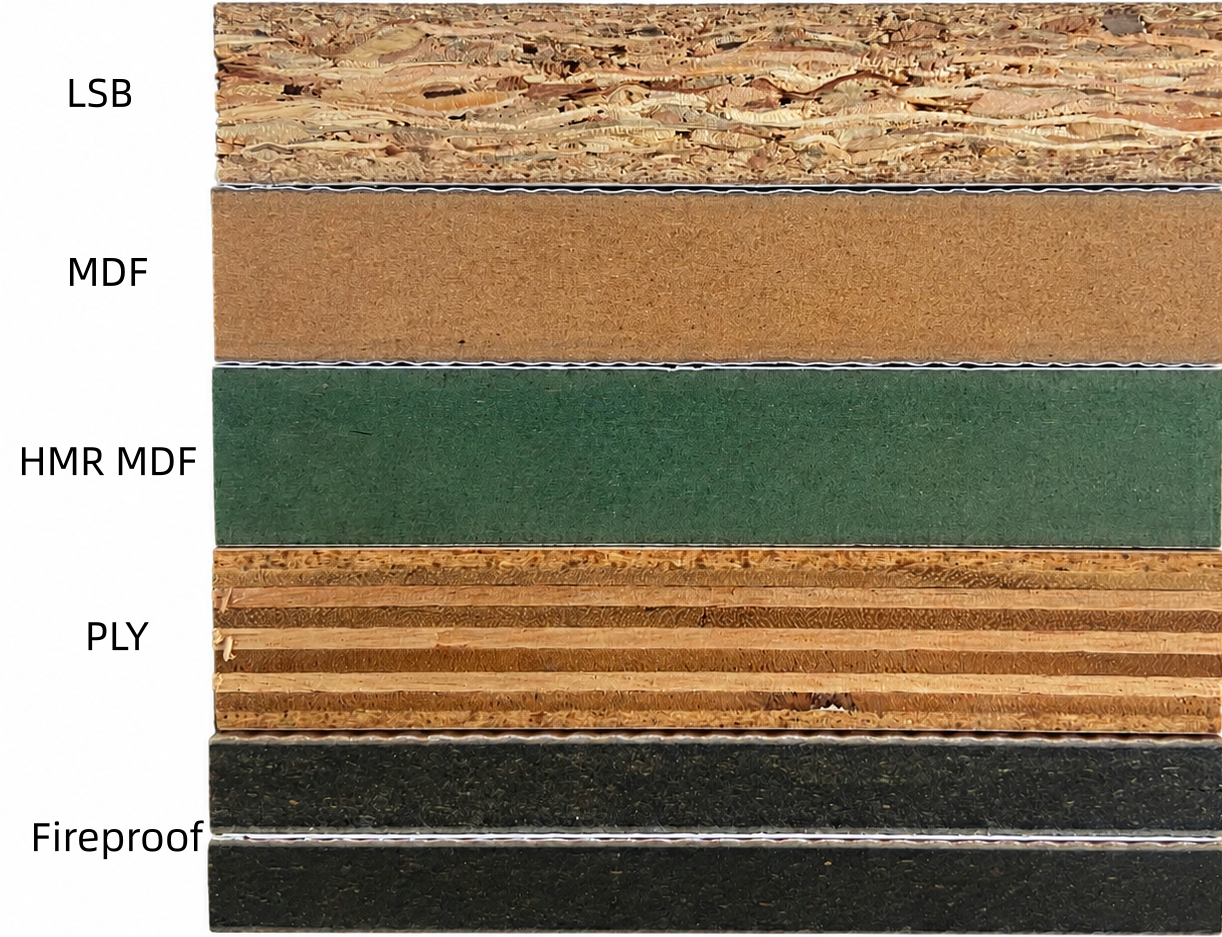
YAKCO's substrate density is stable at 0.72 g/cm³, providing a flat "chassis" for the decorative layer.
5.Conclusion: The "Lifespan" of Delicate Patterns Lies in Pattern Retention
Designers choose Art Deco because its patterns are delicate and distinctive enough.
But the delicacy of the pattern cannot remain only in the rendering–it needs to withstand daily wiping, cleaning, and friction in real spaces.
YAKCO Art Deco Melamine Board's pattern retention of 70% is 20 percentage points above the national standard passing line.
Translated into real‑world performance, this means: the gold lines, geometric borders, and high‑contrast colour blocks of Art Deco remain recognisable after years of daily use, rather than blurring into a mess.
When a designer says, "I want the delicacy of Art Deco," YAKCO responds with 70% pattern retention: delicacy that withstands time.
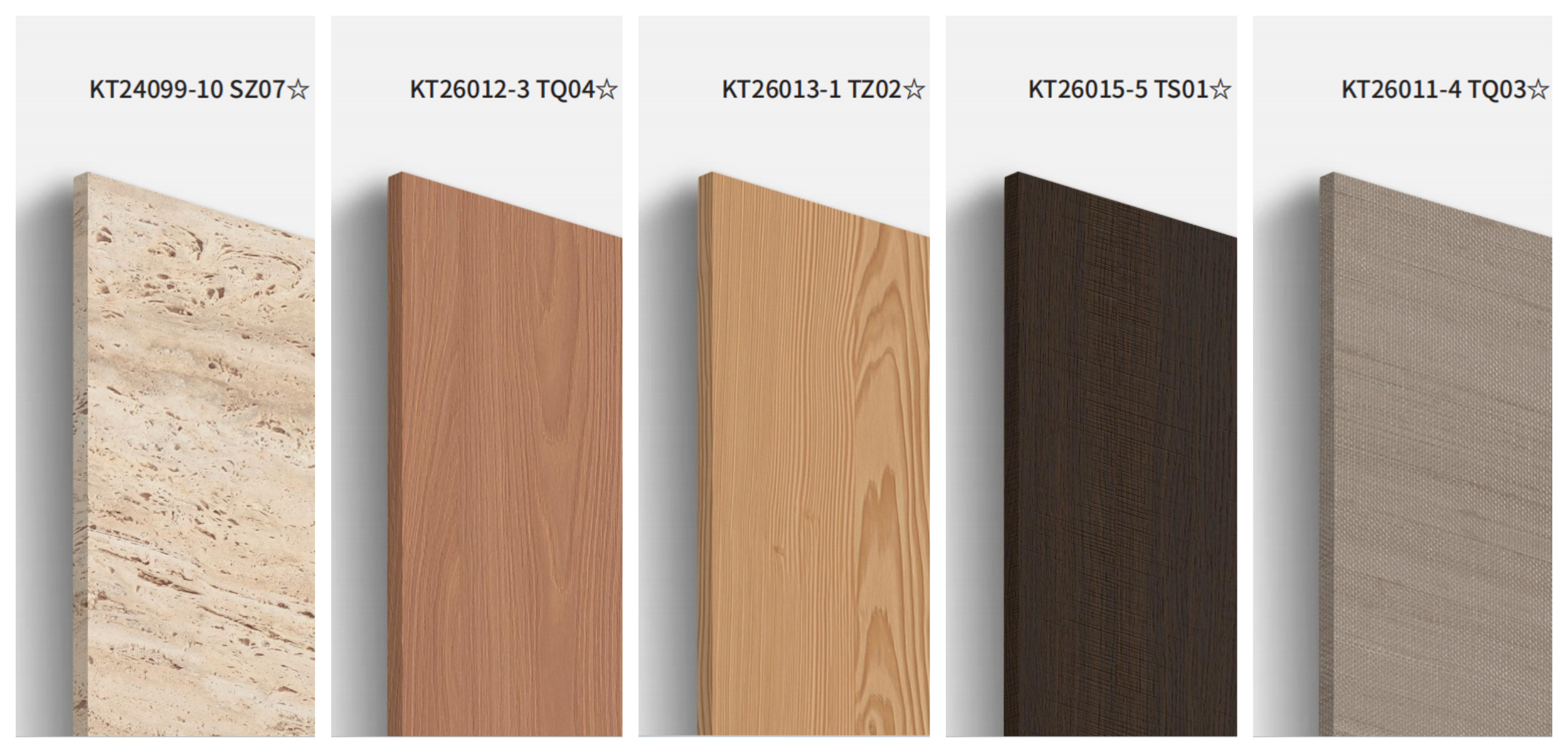
YAKCO specialises in the R&D and manufacturing of Melamine Faced Board, offering parallel series of Art Deco, 3D embossed wood texture melamine faced board, rock design, and leather design, providing "clear patterns, wear‑resistant and durable" decorative solutions for high‑end commercial spaces and residential projects.
More: Premium Melamine Faced Board