




پست قبلی
In contemporary furniture and interior design, decorative surfaces are no longer simply background materials. They have become an important part of spatial identity, influencing how a piece of furniture looks, feels, and is perceived.
Among the design languages returning to the forefront, Art Deco stands out for its distinctive combination of geometry, symmetry, rhythm, and refined luxury. Originally associated with the design culture of the 1920s and 1930s, Art Deco is characterized by geometric forms, streamlined compositions, bold contrasts, and sophisticated material expression. Today, these principles are being reinterpreted for contemporary interiors rather than reproduced literally.
This evolution creates new requirements for decorative materials. Designers increasingly need surfaces that can express geometric depth and visual rhythm while also meeting the practical demands of modern furniture manufacturing.
YAKCO Art Deco Melamine Board is developed around this intersection of design and performance—combining expressive Art Deco-inspired surface patterns with engineered melamine board technology.
To know more about YAKCO Art Deco Melamine Board
From Decoration to Design Language
Art Deco has always been more than a collection of decorative motifs.
Its visual identity comes from the relationship between geometry, proportion, symmetry, and material contrast. Chevron patterns, stepped forms, linear structures, sunburst-inspired compositions, and other geometric elements create a strong sense of order while maintaining visual richness.
In contemporary interiors, however, designers are moving away from overly theatrical interpretations of Art Deco.
Instead, the new approach focuses on controlled geometry, refined texture, and material sophistication .
A geometric surface does not need excessive ornamentation to become visually powerful. Subtle changes in depth, light reflection, and surface rhythm can create a much more contemporary interpretation of Deco aesthetics.
This is where decorative board technology becomes particularly important.
Why Surface Texture Matters in Art Deco Furniture
Traditional flat decorative boards primarily communicate design through color and printed patterns. While effective, a completely flat surface can limit the tactile and visual depth of a geometric design.
Art Deco-inspired furniture requires a stronger relationship between pattern and surface.
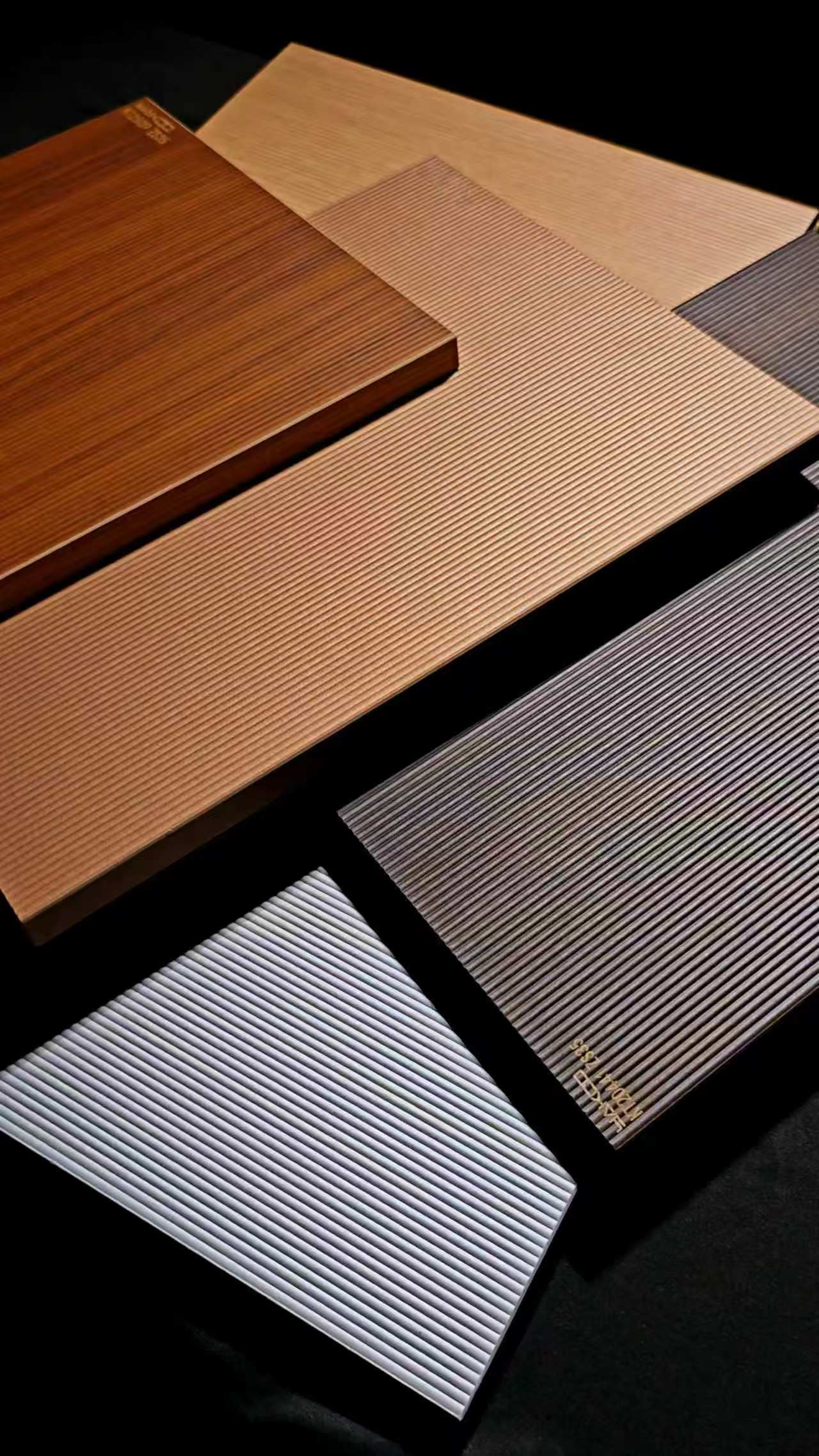
When a geometric pattern is combined with precisely controlled embossing, the design becomes three-dimensional. Light interacts differently with raised and recessed areas, creating natural highlights and shadows.
The result is a surface that changes subtly as the viewing angle or lighting condition changes.
This transforms a decorative pattern from something that is simply seen into something that can also be experienced through touch and depth .
For premium furniture, cabinetry, wall panels, and commercial interiors, this distinction can significantly influence perceived material value.
YAKCO Art Deco Melamine Board: Geometry with Material Depth
YAKCO Art Deco Melamine Board combines decorative paper technology with precision surface embossing and high-pressure lamination.
Rather than relying solely on printed graphics, the surface integrates visual design with physical texture.
This approach allows geometric Art Deco patterns to acquire greater dimensionality and tactile expression.
The key design characteristics include:
- Geometric and rhythmic surface patterns
- Three-dimensional embossed texture
- Controlled visual depth and light interaction
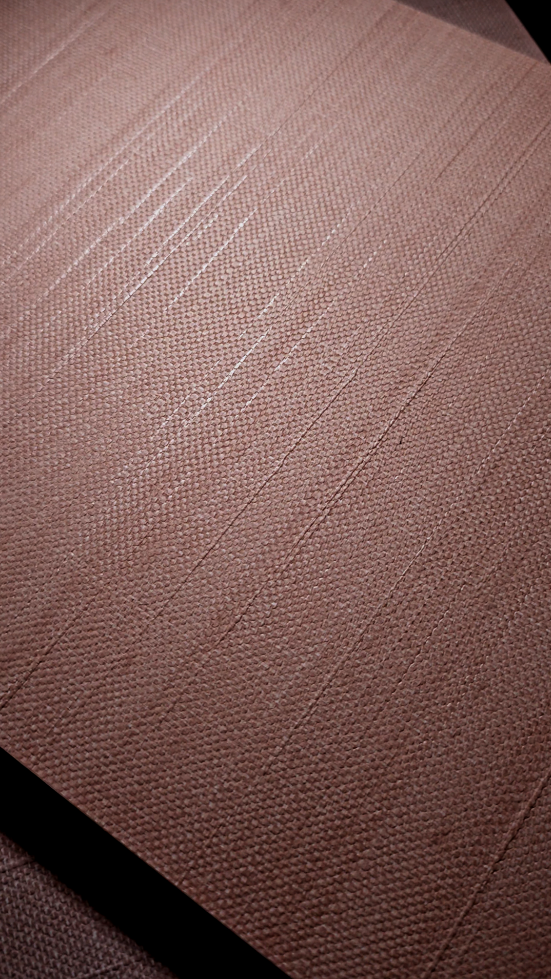
- Refined matte or textured surface effects
- Consistent decorative appearance
- Compatibility with modern furniture manufacturing
The result is a material that can communicate the character of Art Deco while remaining suitable for contemporary production requirements.
Instead of recreating historical furniture literally, designers can use the language of Art Deco as a modern surface design system.
Precision Embossing: Turning Pattern into Tactile Experience
For a decorative board, the quality of embossing is as important as the printed design itself.
If the embossing is too shallow, the pattern may appear visually flat. If the relationship between the printed pattern and physical texture is inaccurate, the surface can lose its natural material character.
Precision embossing addresses this challenge by creating a closer relationship between the visual pattern and the physical surface.
On Art Deco-inspired designs, this is particularly valuable.
Geometric lines need to remain visually clear. Repeated patterns need consistent spacing and depth. Transitions between different areas of the pattern need to remain controlled.
The manufacturing process therefore becomes an important part of the design language.
For YAKCO, surface development is not simply about adding texture to a board. It is about using embossing technology to translate a two-dimensional decorative concept into a more dimensional material experience.
Performance Behind the Aesthetics
Premium decorative materials cannot rely on appearance alone.
Furniture surfaces are exposed to repeated contact, cleaning, friction, temperature changes, and everyday use. For commercial environments, the performance requirements can be even higher.
YAKCO's tested surface-decorated particleboard provides supporting data for this engineering approach.
According to Test Report No. 25-0494, an 18 mm double-finish particleboard sample was evaluated under GB/T 15102-2017. The testing covered mechanical properties and a range of surface-performance characteristics, including bending strength, modulus of elasticity, internal bond, thickness swelling, moisture content, density, screw-holding capability, resistance to high-low temperature cycles, scratching, wearing, cigarette burns, dry heat, staining, cracking, and vapor.
The tested sample achieved Pass judgments across the listed test items. The report records a bending strength of 29.8 MPa , an internal bond value of 0.36 MPa , and 2-hour thickness swelling of 1.0% . Screw-holding capability was recorded at 1110 N on the face and 860 N on the edge .
The surface-performance results are equally relevant to furniture applications.
The sample passed the high-low temperature cycle test without fissures, blistering, discoloration, or wrinkling. It also passed the surface scratching and surface-wearing tests. The recorded wear value was 57 mg/100r , against a reported requirement of no more than 80 mg/100r.
Additional testing recorded Pass results for resistance to cigarette burns, dry heat, surface staining, cracking, and vapor. The tested grades were 4 for cigarette-burn resistance and surface-staining resistance, and 5 for dry-heat, cracking, and vapor resistance.
These results illustrate an important principle in contemporary decorative surfaces:
Design value and engineering performance should develop together.
A visually sophisticated surface becomes significantly more valuable when it can also withstand the practical demands of everyday furniture use.
From Luxury Aesthetics to Manufacturing Efficiency
One of the challenges of traditional luxury materials is the balance between appearance and manufacturing efficiency.
Art Deco furniture historically relied on visually rich materials, detailed craftsmanship, veneers, lacquer, metal, glass, and carefully executed geometric decoration.
Contemporary furniture manufacturing, however, requires consistency, repeatability, machining compatibility, and production efficiency.
Melamine board technology offers a practical alternative.
By integrating the decorative surface directly with an engineered board substrate, manufacturers can achieve a consistent appearance across larger production volumes while maintaining the efficiency required for modern furniture manufacturing.
This makes Art Deco-inspired surfaces more accessible to:
- Customized furniture manufacturers
- Cabinet manufacturers
- Interior contractors
- Hotel and hospitality projects
- Retail and commercial spaces
- Office and executive furniture
- Residential feature walls and built-in furniture
The material therefore moves Art Deco from a purely decorative concept toward a scalable surface solution.
Art Deco for Contemporary Interiors
The renewed interest in Art Deco does not necessarily mean returning to the interiors of the 1920s.
Instead, contemporary designers are extracting its most recognizable principles—geometry, symmetry, contrast, proportion, and material richness—and combining them with modern minimalist architecture.
This makes Art Deco particularly adaptable.
A geometric YAKCO decorative board can become a subtle accent within a minimalist space, or a dominant feature within a luxury interior.
Used on cabinet doors, it can transform a simple furniture volume into a visually structured object.
Applied to wall panels, it can create rhythm and depth across a large architectural surface.
Combined with metal, stone, glass, or dark wood tones, it can reinforce the sophisticated material palette traditionally associated with Deco-inspired interiors.
The result is not a historical reproduction.
It is Modern Art Deco—cleaner, more architectural, and more adaptable to contemporary manufacturing.
A Surface Solution for High-Value Furniture
As furniture markets become increasingly competitive, differentiation is moving beyond basic function.
Consumers and professional buyers are paying greater attention to material appearance, tactile experience, craftsmanship, and the overall perceived value of furniture.
This means decorative surfaces have an increasingly important role in product positioning.
A standard flat board can provide function.
A carefully developed embossed decorative board can provide function, identity, and sensory value at the same time .
For manufacturers, this creates an opportunity to develop furniture collections around distinctive surface languages rather than relying only on conventional wood or stone patterns.
YAKCO Art Deco Melamine Board is designed for precisely this purpose.
It brings together:
**Art Deco-inspired geometry
- Three-dimensional surface expression
- Engineered melamine technology
- Reliable physical performance
- Modern manufacturing efficiency
Together, these characteristics allow decorative surfaces to become an active part of furniture design rather than simply a finishing layer.
Beyond the Revival of Art Deco
The future of Art Deco is unlikely to be defined by reproducing historical patterns exactly.
Instead, its lasting influence lies in its design principles.
Geometry can become more subtle.
Symmetry can become architectural.
Texture can replace excessive ornament.
Material contrast can create luxury without visual overload.
And advanced surface technology can translate these principles into products suitable for modern manufacturing.
This is where YAKCO Art Deco Melamine Board finds its position.
It is not simply a decorative board inspired by a historical style. It represents a broader approach to material design—using surface structure, texture, and engineered performance to give furniture a stronger visual and tactile identity.
Conclusion
The evolution of decorative surfaces is moving from flat visual imitation toward multidimensional material expression .
Art Deco provides a powerful design language for this evolution because its fundamental characteristics—geometry, symmetry, rhythm, and material sophistication—work naturally with modern embossing technology.
YAKCO Art Deco Melamine Board combines these design principles with engineered melamine board technology, creating a surface solution that is visually distinctive, tactilely expressive, and suitable for contemporary furniture production.
For furniture manufacturers, architects, and interior designers, the opportunity is not simply to bring Art Deco back.
It is to reinterpret its geometry through modern materials—and turn decorative surfaces into a defining element of contemporary design.